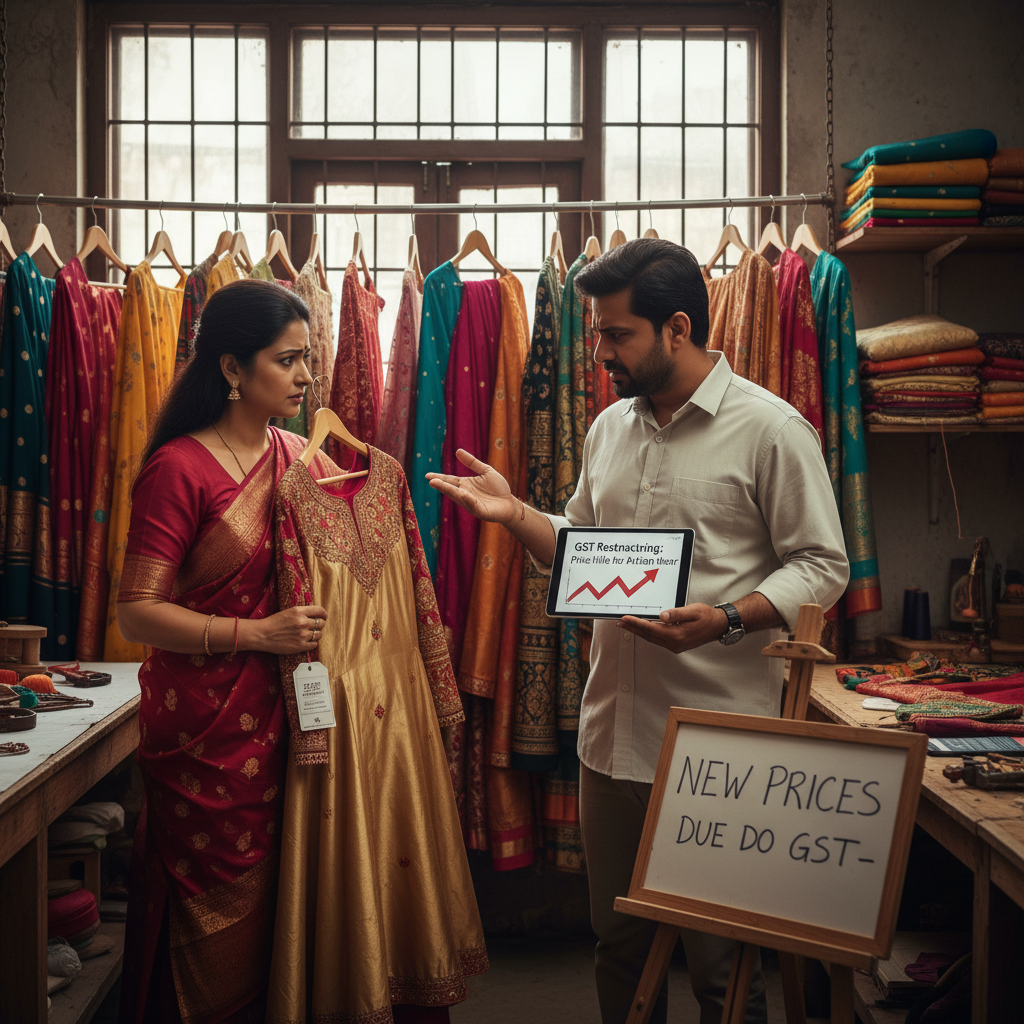
The recent changes in the Goods and Services Tax (GST) structure are poised to deliver a substantial blow to India's vibrant artisan-made ethnic wear sector, directly impacting both traditional craftspeople and middle-class consumers.
The GST Council's Decision
In a move that has sent ripples through the textile industry, the GST Council has significantly raised the price threshold for ethnic garments. Previously, items priced up to ₹1,000 were subject to a specific tax rate, with higher-priced garments facing a different bracket. The new regulation elevates this threshold from ₹1,000 to ₹2,500. While seemingly beneficial at first glance for lower-priced items, the critical change lies in the tax rate for products exceeding this new limit.
Garments priced above ₹2,500 now face an increased tax rate of 18 percent, a noticeable jump from the previous 12 percent. This 6 percentage point increase directly translates to higher costs for a significant portion of the ethnic wear market.
Direct Impact on Traditional and Artisan-Made Products
This policy change disproportionately affects categories that are the backbone of India's textile heritage. Traditional ethnic wear, often intricate and labor-intensive, typically carries a price tag well above the new ₹2,500 threshold. Similarly, wedding attire, known for its elaborate designs, rich fabrics, and extensive handwork, almost invariably falls into this higher price bracket. Handlooms, celebrated for their unique craftsmanship and cultural significance, are also caught in this net, as many high-quality, authentic handloom pieces are priced above the revised threshold.
For artisans, who often operate on thin margins and invest considerable time and skill into each piece, this increase in tax will either eat into their already modest profits or necessitate a price hike, potentially reducing demand for their exquisite products.
Warnings from the Industry
The Clothing Manufacturers Association of India (CMAI) has voiced strong concerns regarding the implications of this GST restructuring. The association warns that these changes will inevitably lead to significant price increases for middle-class consumers, who constitute a large segment of the market for ethnic wear, especially during festive seasons and special occasions.
Furthermore, the CMAI predicts a weakening of the organized retail sector. This sector plays a crucial role in bringing artisan-made products to a wider audience, often providing better market access and fair pricing for craftspeople. A downturn in organized retail could disrupt the supply chain for ethnic wear, making it harder for consumers to access authentic products and for artisans to find stable markets. The impact is expected to be particularly severe on artisan-made products and festive clothing, which are key drivers of the ethnic wear economy.
Conclusion
While the intent behind GST restructuring might be broad, its specific application to ethnic wear threatens to make traditional Indian attire more expensive and less accessible. This could stifle growth for artisans, burden middle-class families, and challenge the very fabric of India's rich textile legacy.
Discover Authentic Ethnic Wear at BeEthnic.store
Despite rising costs, preserving and celebrating India's rich textile heritage remains vital. At BeEthnic.store, we strive to bring you a curated selection of authentic and beautiful ethnic wear, directly from artisans and trusted brands across India. Explore our collections and find pieces that resonate with tradition and quality.
Support artisan craftsmanship and find your perfect ethnic outfit today!
Shop Now at BeEthnic.store